Creatine for Women Over 40: What the Research Says

If you've noticed creatine for women over 40 popping up everywhere lately, you're not imagining it. For years creatine was marketed almost entirely to young men chasing bigger muscles. Now it's on the shelf next to collagen and magnesium, and a lot of women are asking a fair question: is this actually for me, or is it just the next trend?
I'm not a doctor, so I did what I always do: I read the research and the experts who explain it, and I wrote down what held up. Here's the plain version.
Why creatine isn't just for bodybuilders
Creatine is a compound your body already makes, mostly in the liver and kidneys, from three amino acids. You also get some from food, mainly meat and fish. Most of it ends up stored in your muscles, where it helps recycle the energy your muscles use for short, hard efforts: getting up off the floor, carrying groceries up the stairs, the last few reps of a set.
That's the key point. Creatine doesn't build muscle on its own. It helps your muscles do a bit more work during training, and the training is what does the building. That's why the research that holds up pairs creatine with resistance exercise. Harvard Health describes it as one of the most studied supplements out there, and the International Society of Sports Nutrition calls creatine monohydrate the most effective form available for supporting high-intensity exercise performance.
None of that is about bulking up. It's about getting a bit more out of the strength work that many of us are being told, rightly, to keep doing as we get older.
How women's creatine stores differ

Here's where it gets interesting for women. Women tend to eat less meat than men and generally have less muscle mass, so on average we carry less stored creatine. Women's Health reports that women may have 70–80% lower creatine stores than men. That's one reason researchers have become more interested in studying creatine in women specifically, rather than assuming results from studies of young men apply to everyone.
The research in women is still smaller than the research in men, and I'd be wary of anyone promising dramatic results. But the direction of the evidence is why the conversation has shifted.
What the studies used: 3–5 g a day
If you read enough studies, you'll see the same numbers come up:
- Form: creatine monohydrate. It's the form most studies use and the one the ISSN position stand focuses on.
- Dose: about 3–5 g a day is a common maintenance amount.
- Loading: some studies start with a "loading" week of higher doses. It isn't required. A steady daily dose reaches the same place, just more slowly.
- Timing: there's no strong evidence that morning or evening matters much. The best time is the one you'll remember.
Consistency matters more than anything else. Creatine works by building up your stores over weeks, so an on-and-off habit is unlikely to do much.
Pairing creatine with strength training
You don't need to live at the gym. My own routine is light: walks, stretching, and some simple strength work a few times a week. U.S. activity guidelines suggest muscle-strengthening activity at least two days a week for adults, and that can mean bodyweight squats, resistance bands or a pair of dumbbells at home.
If you're thinking about creatine, think about it as a support act for that routine, not a replacement for it. Protein at your meals, sleep and moving regularly matter more than any scoop.
A few common worries, briefly:
- "Will it make me bulky?" No. Some people see a small change on the scale early on because creatine pulls water into muscle. It isn't fat.
- "Does it cause hair loss?" This comes from one small 2009 study that hasn't been confirmed since. Researchers describe the evidence as weak.
- "Is it safe?" In healthy adults, studies at common doses have generally found it well tolerated. If you have a kidney condition, are pregnant, or take medication, talk with your doctor first.
What about bones?
Some researchers have wondered whether creatine could help bones as well as muscles. The biggest test so far followed 237 postmenopausal women for two years while they lifted weights and walked. Creatine did not change bone mineral density, the number most doctors track. It did keep a few measures of hip-bone shape and strength steadier than a placebo, which the authors say may matter, though that still needs proof. My honest takeaway: training is what builds bone, and creatine is not a bone treatment.
Don't forget hydration: electrolytes during exercise
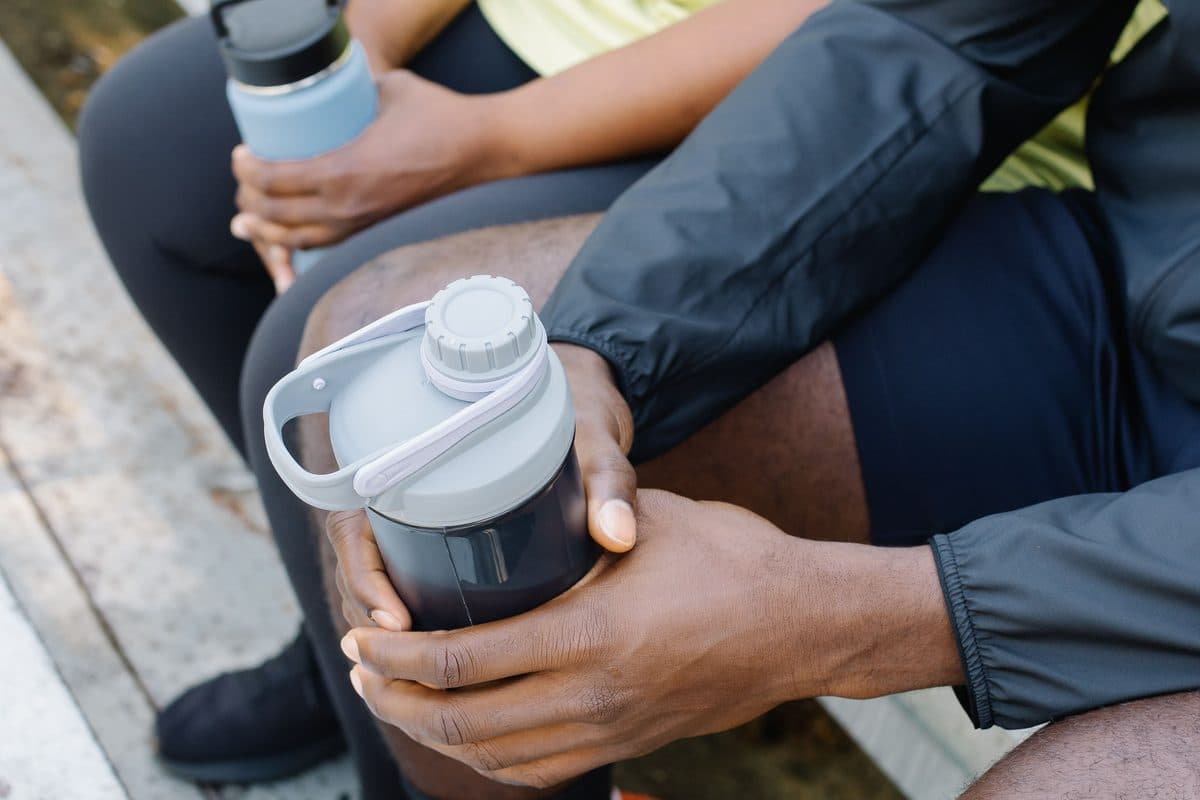
Strength work and creatine get the headlines, but hydration matters too, especially on longer or sweatier days. Sweat is about 99% water. Most of the rest is sodium and chloride, with smaller amounts of potassium, magnesium and other minerals, according to Cleveland Clinic. These minerals are electrolytes, and they help your body keep fluid balanced inside and outside your cells and support normal muscle and nerve function.
For most moderate workouts of an hour or less, water is enough. Cleveland Clinic's dietitians suggest considering an electrolyte drink when you exercise for more than an hour, train harder, are out in the heat, or sweat heavily. Here's what each mineral does:
- Sodium is the electrolyte you lose most in sweat, and it helps your body hold onto the fluid you drink.
- Potassium works alongside sodium to keep fluid balanced across your cells.
- Magnesium helps your cells turn nutrients into energy and is used by your muscles and nerves.
A simple habit: drink water before you start, sip during, and on long or hot sessions, add electrolytes. If you have a heart or kidney condition or have been told to limit sodium, check with your doctor before adding a high-sodium drink.
Creatine and the brain: early days
Your brain uses creatine too, which is why researchers are testing it beyond the gym. In a small trial of 36 women in perimenopause or menopause, a form of creatine taken daily for 8 weeks raised brain creatine levels and sped up reaction time compared with a placebo. Mood swings eased a little, but that result wasn't statistically significant. An older 24-week study in older women found no change in memory or mood from creatine, while the strength training itself did lift mood. So this is interesting, but unproven.
How to read a creatine label
When you compare products, these are the questions I'd ask:
- What form is it? Look for "creatine monohydrate."
- How many grams per serving? Look for actual grams, not just "scoops." Independent testing has found some creatine gummies contained far less creatine than their labels claimed.
- What else is in it? Some products combine creatine with electrolytes, flavors or sweeteners. Make sure the extras are things you actually want.
- Who makes it? Supplements aren't approved by the FDA before they're sold, so the maker's standards matter.
The bottom line
Creatine isn't a miracle and it isn't just for bodybuilders. It's a well-studied compound that helps your muscles get a bit more out of strength training. Women tend to start with lower stores, which is why researchers are paying more attention. If you try it, choose monohydrate, check the grams, give it consistent daily use, and check with your doctor if you have a health condition.
Questions
Do I need electrolytes when I exercise?
For moderate workouts of an hour or less, water is usually enough. Electrolytes matter more for longer or harder sessions, heat, or heavy sweating.
Is creatine safe for women over 40?
Creatine monohydrate is one of the most studied supplements, and research in healthy adults has generally found it well tolerated at common doses. Talk with your doctor first if you have a kidney condition, are pregnant, or take medication.
How much creatine do women take in studies?
Many studies use 3–5 g of creatine monohydrate a day. A loading phase isn't required.
Will creatine make me bulky?
No. Some people see a small early change on the scale from water held in muscle. That isn't fat, and creatine on its own doesn't add bulk.
Do I have to work out for creatine to matter?
Most of the research pairs creatine with resistance training, so it makes the most sense alongside regular strength work, even a light routine.
Does creatine help bones after menopause?
A 2-year trial in postmenopausal women found creatine did not change bone density, though some hip-bone measures held steadier. Training is what builds bone; creatine is not a bone treatment.
Sources
- Your Complete Guide to Creatine for Women — Women's Health, September 24, 2026
- International Society of Sports Nutrition position stand: safety and efficacy of creatine supplementation — Journal of the International Society of Sports Nutrition, 2017
- Sports Drinks: Are Electrolytes Healthy for You? — Cleveland Clinic
- What Is Sweat & Why Do We Sweat? — Cleveland Clinic
- What is creatine? — Harvard Health Publishing, March 20, 2024
- A 2-yr Randomized Controlled Trial on Creatine Supplementation during Exercise for Postmenopausal Bone Health (Chilibeck, Candow et al.) — Medicine & Science in Sports & Exercise, 2023
- Effects of 8-Week Creatine Hydrochloride and Creatine Ethyl Ester Supplementation on Cognition, Clinical Outcomes, and Brain Creatine Levels in Perimenopausal and Menopausal Women (CONCRET-MENOPA) — Journal of the American Nutrition Association, 2026
- Creatine Supplementation Associated or Not with Strength Training upon Emotional and Cognitive Measures in Older Women (Alves et al.) — PLoS ONE, 2013
Photos: Pexels (cottonbro studio; Liliana Drew)