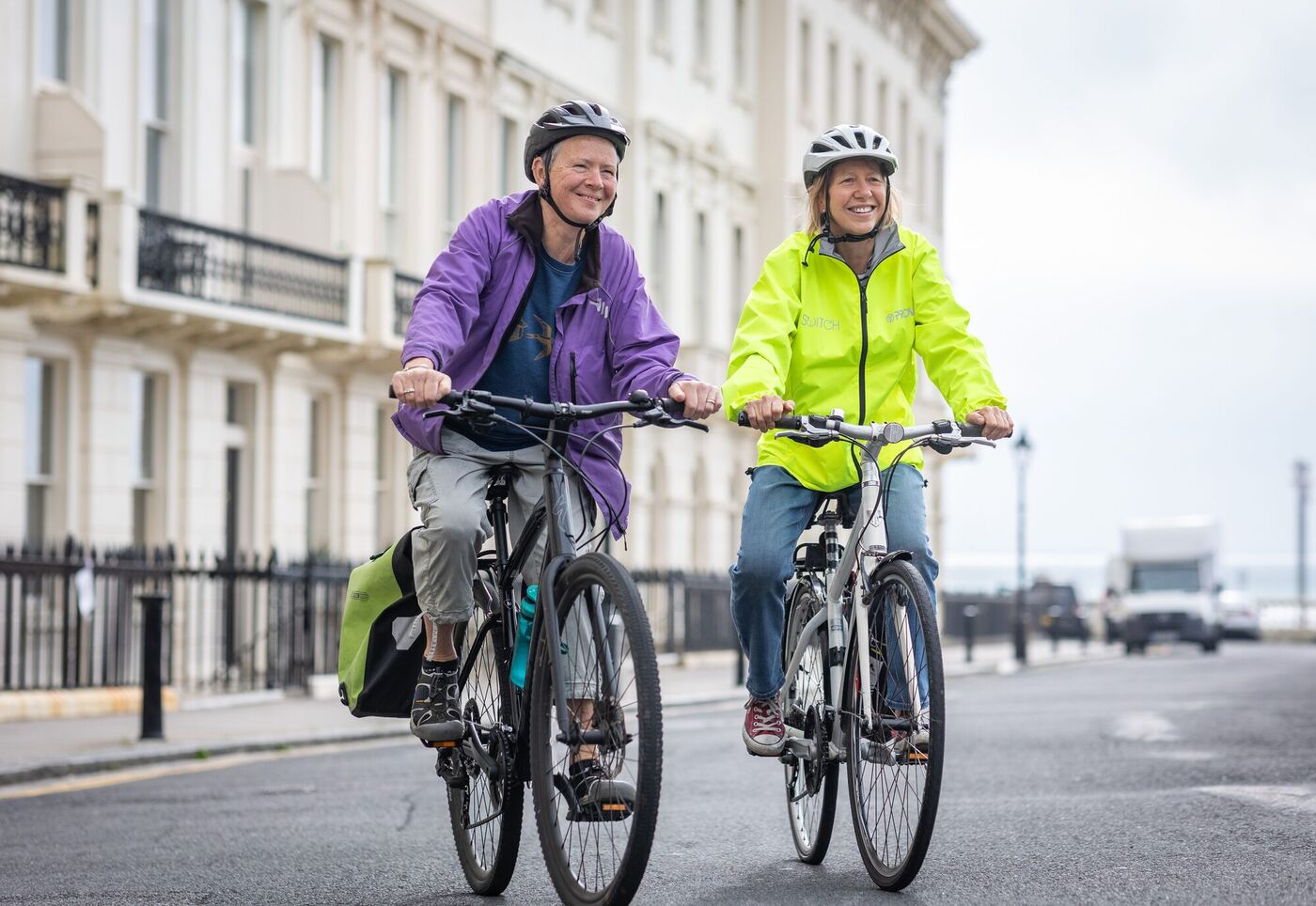
ACTIVITY GUIDE CYCLING
Electrolytes & Creatine for Women Cycling After 40
You feel great for the first half of the ride and drained by the end. Here's the sweat-and-sodium math nobody explains at the trailhead — and where EverAble fits.
The short version: an hour in the saddle can mean a liter or more of sweat and real sodium loss — water alone often can't keep pace after 40.
0.5–2.0 L/hr
Typical sweat rate for road cycling in the heat (Gatorade Sports Science Institute)
690–1,150mg
Sodium lost per liter of sweat during exercise (GSSI)
22%
Share of U.S. cycling-trip growth (1995–2009) that came from riders aged 60–79 (PeopleForBikes)
Why this sport, and why it hits differently after 40
It adds up fast, even at a relaxed pace
Cycling at a pace you can hold "mile after mile" sits squarely in what Cleveland Clinic calls Zone 2 cardio — roughly 60 to 70% of max heart rate, the zone the American Heart Association's 150-minutes-a-week moderate-intensity guideline is built around. It doesn't have to feel hard to be real work: at a moderate 14–15.9 mph pace, a 155-lb rider burns around 360 calories every 30 minutes, per Harvard Health's exercise data — output that keeps compounding over a longer ride.
Sweat losses can be bigger than they feel
Road cycling sweat rates commonly run 0.5 to 2.0 liters an hour in the heat, and can reach 3 to 4 liters an hour in more extreme conditions, according to Gatorade Sports Science Institute (GSSI) research on endurance athletes. That sweat carries real sodium with it — GSSI's own data puts typical sweat sodium concentration between 690mg and 1,150mg per liter, with some individual "salty sweaters" losing meaningfully more.
Thirst isn't a reliable alarm after a certain age
GSSI research on older athletes notes that aging is accompanied by reduced thirst sensation and increased water loss through the kidneys — older exercisers consistently rate themselves as less thirsty than younger people experiencing the same level of dehydration. That makes it easy to under-hydrate on a long ride without ever feeling like you need to.
Where EverAble fits
One scoop, full dose of both
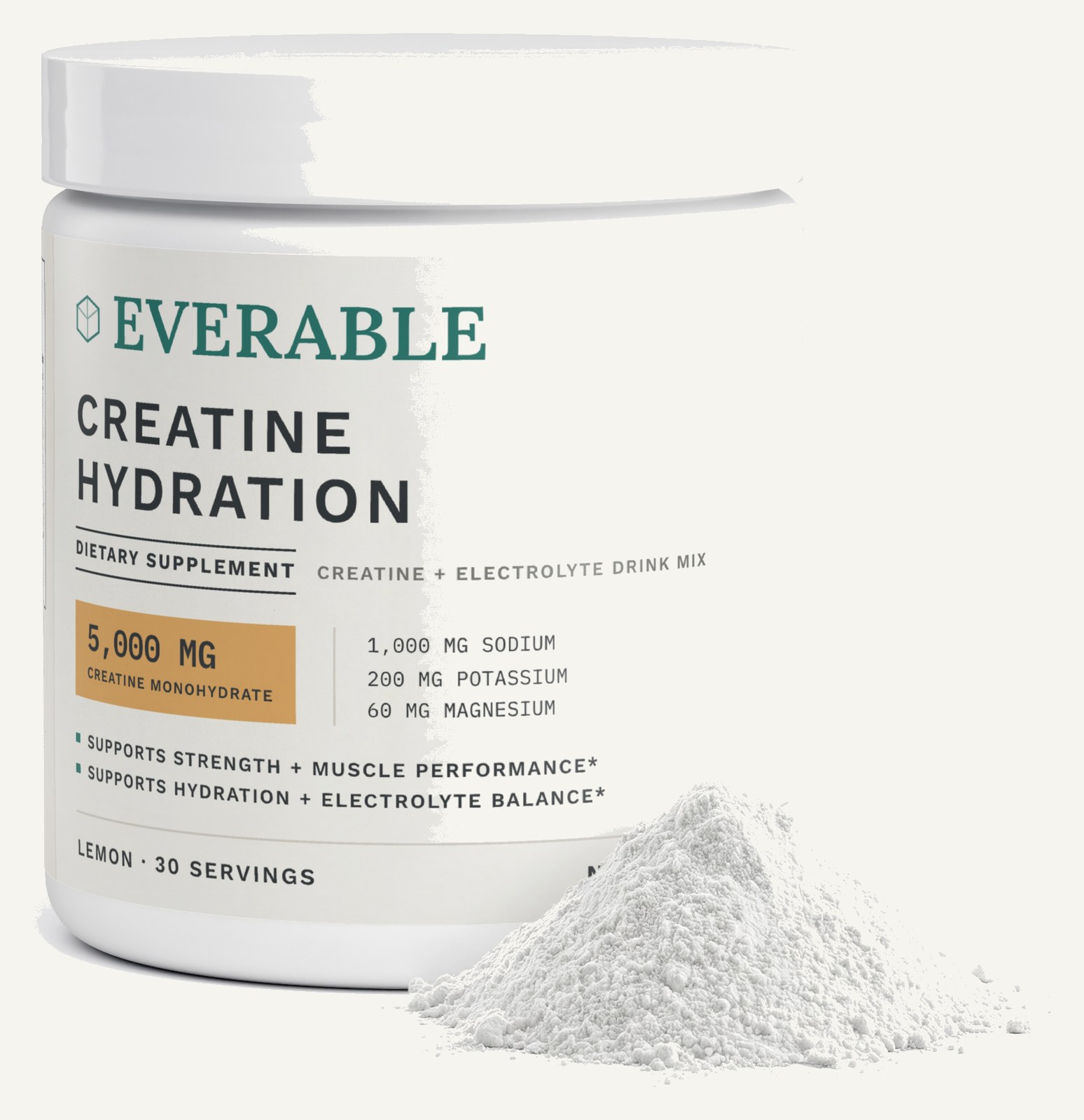
EverAble's Creatine + Electrolyte Powder puts the electrolyte side of that routine into the same scoop as your daily creatine. One serving carries 5g of creatine monohydrate, along with 1,000mg sodium, 200mg potassium, and 60mg magnesium malate — a full dose of both, not a diluted trace amount of one.
Built for the routine you already have
It's formulated to support hydration and electrolyte balance, mixed into water once a day, before or after a ride.
This statement has not been evaluated by the Food and Drug Administration. This product is not intended to diagnose, treat, cure, or prevent any disease.
Other sports




Questions with answers
Why do I lose more fluid on a bike ride than it feels like?
On a moving bike, airflow evaporates sweat quickly, which can make fluid loss less noticeable than it would be during a stationary or lower-airflow activity. What the research does confirm is the underlying volume: road cycling sweat rates commonly run 0.5 to 2.0 liters an hour in the heat, per Gatorade Sports Science Institute data on endurance athletes, and that sweat carries real sodium with it.
Do cyclists over 40 need to think about hydration differently than younger riders?
The physical demand of a ride doesn't change dramatically with age, but the body's early-warning system does: GSSI research on older athletes notes that aging brings reduced thirst sensation and increased fluid loss through the kidneys, meaning older riders can be meaningfully dehydrated before they feel thirsty enough to do something about it. That makes it worth drinking on a schedule during longer rides, not just when you notice you're thirsty.
How much sodium do I actually lose on a ride?
It varies by person, heat, and intensity, but sweat sodium concentration typically falls between about 690mg and 1,150mg per liter, per GSSI data. On a longer or hotter ride producing a liter or more of sweat per hour, that's a real sodium deficit if you're only replacing it with water.
Is water enough, or should I be adding electrolytes on longer rides?
For a short, easy spin, water alone is usually fine. For longer rides, hot conditions, or higher intensity, most hydration guidance for endurance athletes recommends adding electrolytes rather than relying on water alone, since water replaces volume but not the sodium lost through sweat.
What's actually in EverAble's Creatine + Electrolyte formula?
One scoop delivers a full dose of both sides — not a diluted trace of one.
5g creatine monohydrate • 1,000mg sodium • 200mg potassium • 60mg magnesium malate
Is this for serious or competitive cyclists only, or does it work for casual riders too?
It's built for active adults 40+ who ride regularly — whether that's a road cycling club, a weekend trail loop, or a standing commute — not for competitive-racing training protocols. If you're in the saddle often enough to notice sweat loss or fatigue on longer rides, the formula is aimed at you.
Why do I lose more fluid on a bike ride than it feels like?
On a moving bike, airflow evaporates sweat quickly, which can make fluid loss less noticeable than it would be during a stationary or lower-airflow activity. What the research does confirm is the underlying volume: road cycling sweat rates commonly run 0.5 to 2.0 liters an hour in the heat, per Gatorade Sports Science Institute data on endurance athletes, and that sweat carries real sodium with it.
Do cyclists over 40 need to think about hydration differently than younger riders?
The physical demand of a ride doesn't change dramatically with age, but the body's early-warning system does: GSSI research on older athletes notes that aging brings reduced thirst sensation and increased fluid loss through the kidneys, meaning older riders can be meaningfully dehydrated before they feel thirsty enough to do something about it. That makes it worth drinking on a schedule during longer rides, not just when you notice you're thirsty.
How much sodium do I actually lose on a ride?
It varies by person, heat, and intensity, but sweat sodium concentration typically falls between about 690mg and 1,150mg per liter, per GSSI data. On a longer or hotter ride producing a liter or more of sweat per hour, that's a real sodium deficit if you're only replacing it with water.
Is water enough, or should I be adding electrolytes on longer rides?
For a short, easy spin, water alone is usually fine. For longer rides, hot conditions, or higher intensity, most hydration guidance for endurance athletes recommends adding electrolytes rather than relying on water alone, since water replaces volume but not the sodium lost through sweat.
Sources
Last reviewed September 19, 2026
- Gatorade Sports Science Institute — Hydration and Nutrition Considerations for Endurance Cycling Exercise in the Heat
- Gatorade Sports Science Institute — Dietary Water and Sodium Requirements for Active Adults
- Cleveland Clinic — What Is Zone 2 Cardio?
- Harvard Health — Calories Burned in 30 Minutes for People of Three Different Weights
- PeopleForBikes — Participation Statistics