ACTIVITY GUIDE STRENGTH TRAINING
Electrolytes & Creatine for Women Strength Training After 40
Lifting matters more than ever after 40 — and yes, you're sweating through it too. Here's why hydration belongs in the routine, and where EverAble fits.
The short version: muscle mass declines an estimated 3–5% per decade after 30, resistance training is the well-documented countermeasure, and it comes with its own real hydration demands.
3–5%
Average muscle mass lost per decade starting around age 30 (NIH)
2+ days/week
CDC's minimum recommended frequency for muscle-strengthening activity, at any age
690–1,150mg
Sodium lost per liter of sweat during exercise (Gatorade Sports Science Institute)
Why this activity, and why it matters more after 40
Why lifting matters more after 40
Muscle mass declines an estimated 3 to 5% per decade starting around age 30, according to NIH's News in Health — and researchers estimate 10 to 20% of older adults have sarcopenia, the clinical term for that age-related muscle loss, which roughly doubles hospitalization risk. Resistance training is the well-documented countermeasure: Mayo Clinic notes it helps protect bone health and may lower the risk of osteoporosis, a condition women are at higher risk for as they age, per Cleveland Clinic. The CDC recommends at least 2 days a week of muscle-strengthening activity for adults of any age.
It's still a real physical session
Even without sustained cardio, a resistance-training session raises your heart rate and causes real sweating. The Compendium of Physical Activities — the standard exercise-science reference — puts typical strength-training MET values between roughly 3.5 and 6.0 depending on intensity, comparable to a brisk-to-vigorous walk.
The same sweat-and-sodium math still applies
Sweat, and the sodium it carries, doesn't require an hour of steady cardio to add up. Gatorade Sports Science Institute (GSSI) data puts typical sweat sodium concentration between 690mg and 1,150mg per liter during exercise generally — the weight room included — and notes that the body's thirst signal becomes a progressively less reliable cue for fluid needs with age.
Where EverAble fits
One scoop, full dose of both
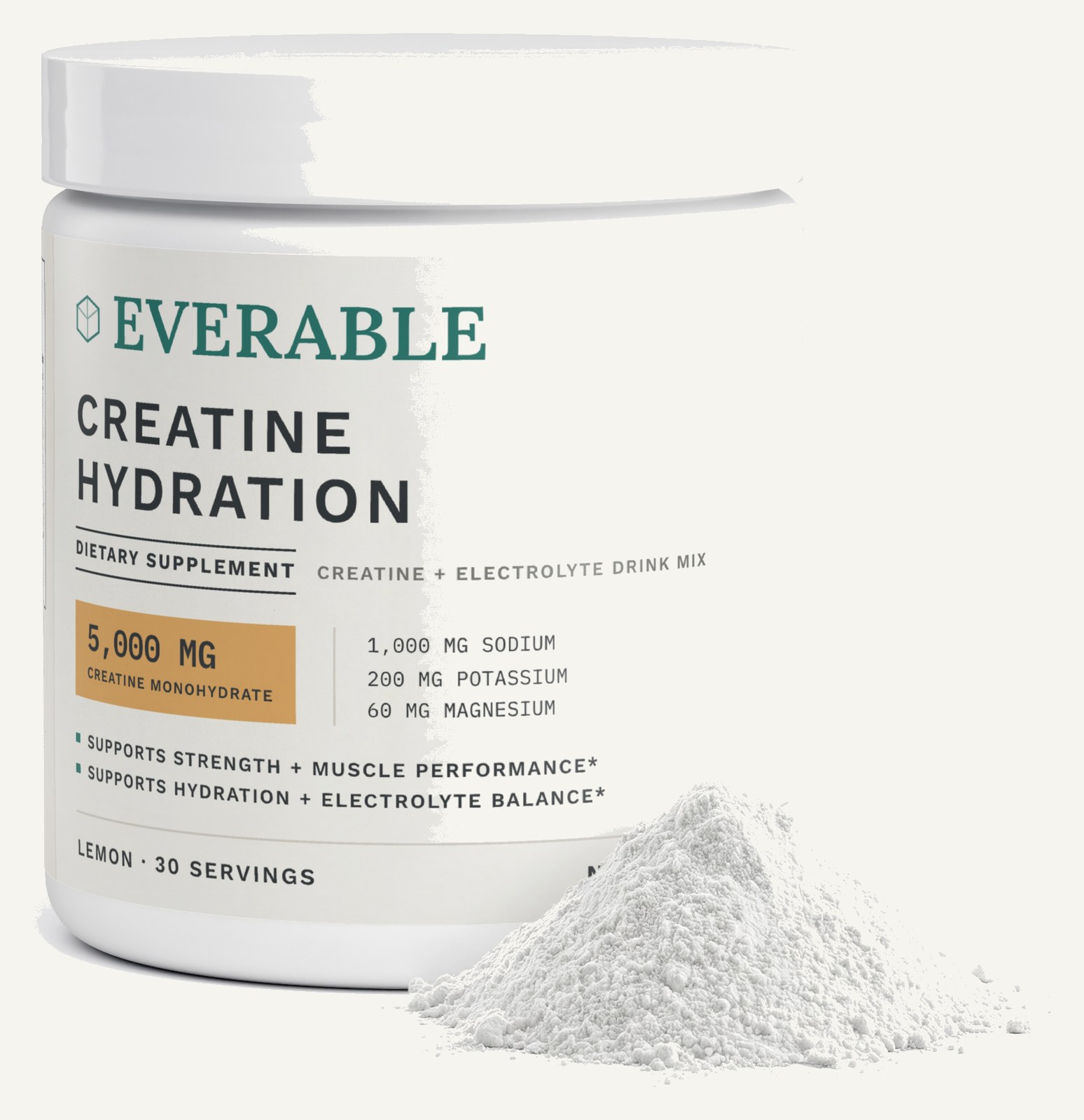
EverAble's Creatine + Electrolyte Powder puts the electrolyte side of that routine into the same scoop as your daily creatine. One serving carries 5g of creatine monohydrate, along with 1,000mg sodium, 200mg potassium, and 60mg magnesium malate — a full dose of both, not a diluted trace amount of one.
Built for the routine you already have
It's formulated to support hydration and electrolyte balance, mixed into water once a day — whether that's on a lifting day or a rest day.
This statement has not been evaluated by the Food and Drug Administration. This product is not intended to diagnose, treat, cure, or prevent any disease.
Other sports




Questions with answers
Does strength training make you sweat as much as cardio?
It doesn't need steady-state cardio to raise your heart rate and cause real sweating. The Compendium of Physical Activities puts typical strength-training MET values between roughly 3.5 and 6.0 depending on intensity — comparable to a brisk-to-vigorous walk — and sweat, along with the sodium it carries, follows the same general pattern as other moderate exercise.
Why does muscle mass matter more as you get older?
Muscle mass declines an estimated 3 to 5% per decade starting around age 30, per NIH, and researchers estimate 10 to 20% of older adults have sarcopenia, the clinical term for that decline — which roughly doubles hospitalization risk. Resistance training is the well-established way to counter it, alongside benefits for bone density that matter especially for women, per Mayo Clinic and Cleveland Clinic.
Do people who strength train need to think about electrolytes, or is that just for runners and cardio?
The same sweat-and-sodium math applies in the weight room, even without sustained cardio. Gatorade Sports Science Institute data puts typical sweat sodium concentration between 690mg and 1,150mg per liter during exercise generally, and that includes resistance-training sessions.
Is water enough during a lifting session, or should I add electrolytes?
For a short, light session, water alone is usually fine. For longer or more intense sessions where you're sweating meaningfully, adding electrolytes alongside water helps address the sodium that sweat carries out, which plain water alone doesn't restore.
What's actually in EverAble's Creatine + Electrolyte formula?
One scoop delivers a full dose of both sides — not a diluted trace of one.
5g creatine monohydrate • 1,000mg sodium • 200mg potassium • 60mg magnesium malate
Is this for competitive lifters or bodybuilders, or does it work for a regular strength routine?
It's built for active adults 40+ who strength train as part of a general fitness routine — not a performance or bodybuilding supplement. If you're on a regular lifting schedule and thinking about how hydration fits into it, the formula addresses the hydration and electrolyte side of that routine.
Does strength training make you sweat as much as cardio?
It doesn't need steady-state cardio to raise your heart rate and cause real sweating. The Compendium of Physical Activities puts typical strength-training MET values between roughly 3.5 and 6.0 depending on intensity — comparable to a brisk-to-vigorous walk — and sweat, along with the sodium it carries, follows the same general pattern as other moderate exercise.
Why does muscle mass matter more as you get older?
Muscle mass declines an estimated 3 to 5% per decade starting around age 30, per NIH, and researchers estimate 10 to 20% of older adults have sarcopenia, the clinical term for that decline — which roughly doubles hospitalization risk. Resistance training is the well-established way to counter it, alongside benefits for bone density that matter especially for women, per Mayo Clinic and Cleveland Clinic.
Do people who strength train need to think about electrolytes, or is that just for runners and cardio?
The same sweat-and-sodium math applies in the weight room, even without sustained cardio. Gatorade Sports Science Institute data puts typical sweat sodium concentration between 690mg and 1,150mg per liter during exercise generally, and that includes resistance-training sessions.
Is water enough during a lifting session, or should I add electrolytes?
For a short, light session, water alone is usually fine. For longer or more intense sessions where you're sweating meaningfully, adding electrolytes alongside water helps address the sodium that sweat carries out, which plain water alone doesn't restore.
Sources
Last reviewed September 19, 2026
- Cleveland Clinic Newsroom — Importance of Strength Training for Women
- NIH News in Health — Slowing Sarcopenia
- Gatorade Sports Science Institute — Dietary Water and Sodium Requirements for Active Adults
- CDC — Physical Activity Basics: Guidelines for Americans
- Mayo Clinic — Strength Training: Get Stronger, Leaner, Healthier