ACTIVITY GUIDE YOGA & STUDIO
Electrolytes & Creatine for Women Doing Yoga After 40
A heated class can mean more sweat loss than most people realize — and most of it isn't getting replaced during class. Here's the math, and where EverAble fits.
The short version: one 90-minute heated class can mean over a liter of sweat lost, with only about a quarter of it typically replaced during class.
1.54 L
Average sweat loss during a 90-minute heated yoga class (Physiological Reports study, avg. age 47)
25%
Share of that sweat loss actually replaced by fluid intake during the same class
6.8g
Average sodium chloride lost over that same 90-minute session
Why this activity, and why it hits differently after 40
A heated class is a real sweat session
The Compendium of Physical Activities puts hot yoga at a modest 3.0 METs — light by exercise-intensity standards. An ACE-sponsored study comparing a 70°F class to a roughly 92°F heated class found heart rate stayed in a similarly "light" zone in both (56–57% of max heart rate) — heat didn't raise cardiovascular demand much, but it did raise how hard the class felt and how much core temperature rose, peaking around 102.4°F in both conditions.
The sweat loss can outpace what you drink
A peer-reviewed study of a 90-minute class heated to 105°F, with participants averaging 47 years old, measured an average sweat loss of 1.54 liters per person — but only about 0.38 liters consumed during class, replacing roughly a quarter of what was lost. That sweat carried an average of about 6.8 grams of sodium chloride out with it.
Thirst is an even less reliable guide with age
Gatorade Sports Science Institute (GSSI) research on older exercisers found a consistently weaker thirst response to the same level of dehydration seen in younger people — meaning the gap between what a heated class sweats out and what feels necessary to drink can be even wider after 40.
Where EverAble fits
One scoop, full dose of both
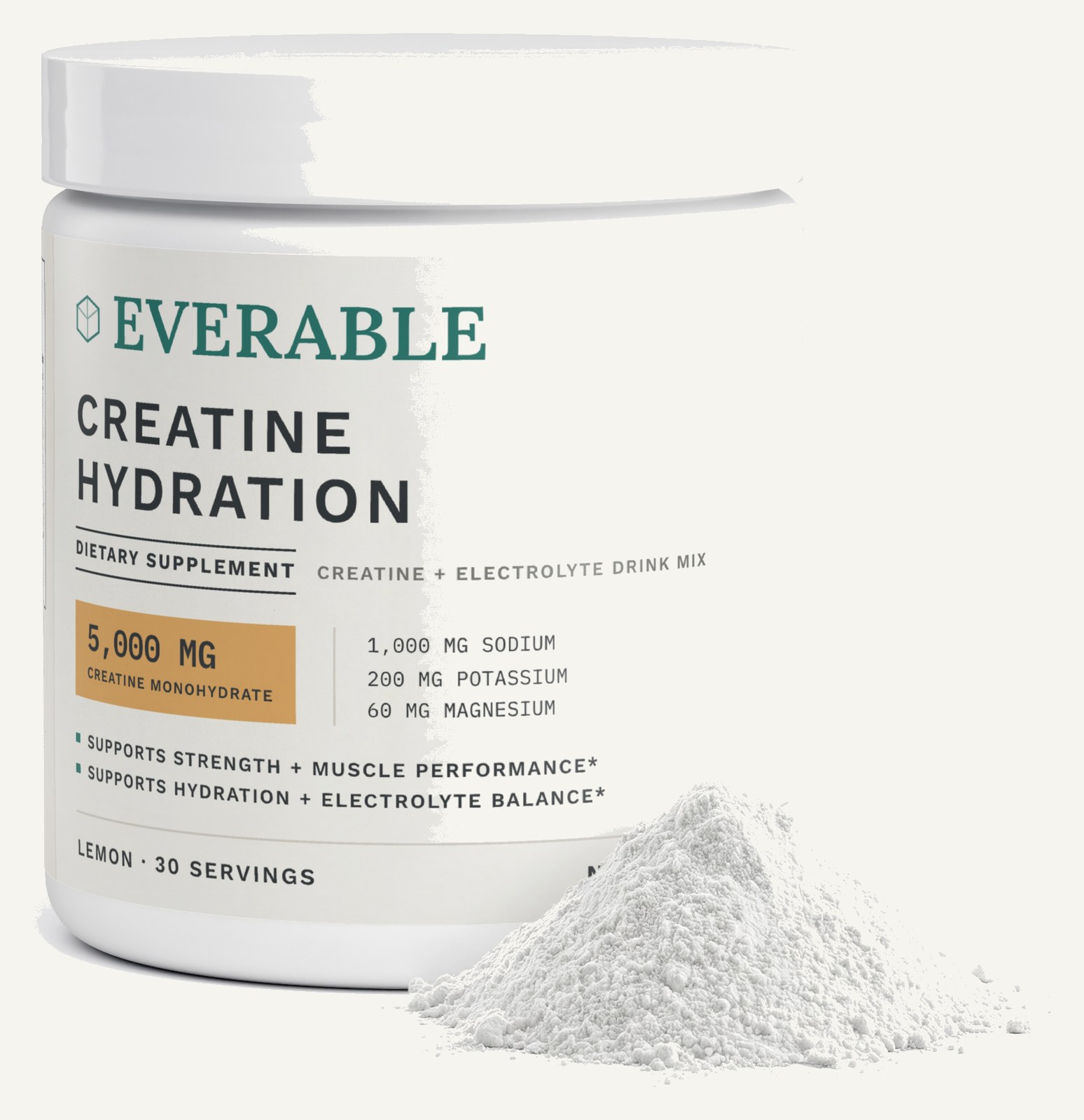
EverAble's Creatine + Electrolyte Powder puts the electrolyte side of that routine into the same scoop as your daily creatine. One serving carries 5g of creatine monohydrate, along with 1,000mg sodium, 200mg potassium, and 60mg magnesium malate — a full dose of both, not a diluted trace amount of one.
Built for the routine you already have
It's formulated to support hydration and electrolyte balance, mixed into water once a day, before or after class.
This statement has not been evaluated by the Food and Drug Administration. This product is not intended to diagnose, treat, cure, or prevent any disease.
Other sports




Questions with answers
Does a hot yoga class really make you sweat that much?
Yes — a peer-reviewed study of a 90-minute class heated to 105°F measured an average sweat loss of 1.54 liters per person, among participants averaging 47 years old. That's a substantial fluid loss for a class that, by heart-rate measures, stays in a relatively light exertion zone.
Why don't I feel as thirsty as I probably should after a heated class?
In that same study, participants drank only about 0.38 liters during class — roughly a quarter of what they'd actually sweated out. GSSI research on aging and thirst also notes that older exercisers experience a weaker thirst response to dehydration than younger people, which can widen that gap further.
Is regular (non-heated) yoga demanding enough to worry about hydration?
A standard, non-heated class is lower intensity — the Compendium of Physical Activities puts most yoga styles between about 2.3 and 4.0 METs — so fluid needs are generally lower than a heated class. It's the heat, more than the poses themselves, that drives the bigger sweat and sodium losses.
Should I drink electrolytes during class or after?
Either can help address the gap between what's sweated out and what's typically consumed during a heated class. GSSI's general guidance for active adults recommends replacing fluids based on actual sweat loss and using a sodium-containing beverage rather than plain water once sweat losses are significant.
What's actually in EverAble's Creatine + Electrolyte formula?
One scoop delivers a full dose of both sides — not a diluted trace of one.
5g creatine monohydrate • 1,000mg sodium • 200mg potassium • 60mg magnesium malate
Is this only for hot yoga, or does it work for regular yoga, pilates, and barre too?
It's built for active adults 40+ with a regular studio practice, whatever form that takes — heated or unheated yoga, pilates, or barre. If you're sweating through a class regularly and thinking about how hydration fits into that routine, the formula is aimed at you.
Does a hot yoga class really make you sweat that much?
Yes — a peer-reviewed study of a 90-minute class heated to 105°F measured an average sweat loss of 1.54 liters per person, among participants averaging 47 years old. That's a substantial fluid loss for a class that, by heart-rate measures, stays in a relatively light exertion zone.
Why don't I feel as thirsty as I probably should after a heated class?
In that same study, participants drank only about 0.38 liters during class — roughly a quarter of what they'd actually sweated out. GSSI research on aging and thirst also notes that older exercisers experience a weaker thirst response to dehydration than younger people, which can widen that gap further.
Is regular (non-heated) yoga demanding enough to worry about hydration?
A standard, non-heated class is lower intensity — the Compendium of Physical Activities puts most yoga styles between about 2.3 and 4.0 METs — so fluid needs are generally lower than a heated class. It's the heat, more than the poses themselves, that drives the bigger sweat and sodium losses.
Should I drink electrolytes during class or after?
Either can help address the gap between what's sweated out and what's typically consumed during a heated class. GSSI's general guidance for active adults recommends replacing fluids based on actual sweat loss and using a sodium-containing beverage rather than plain water once sweat losses are significant.
Sources
Last reviewed September 19, 2026
- Alrefaie et al. — Physiological Reports: Salt and Water Balance After Sweat Loss, A Study of Bikram Yoga (2020)
- Gatorade Sports Science Institute — Dietary Water and Sodium Requirements for Active Adults
- ACE — Hot Yoga: Go Ahead and Turn Up the Heat (2013)
- Harvard Health — Yoga Offers Range of Health Benefits
- Yoga Alliance / Yoga Journal — 2016 Yoga in America Study