ACTIVITY GUIDE OUTDOORS & HIKING
Electrolytes & Creatine for Women Hiking After 40
The guidance says a quart of water an hour on a hot trail — but water alone doesn't replace what you sweat out. Here's the electrolyte math, and where EverAble fits.
The short version: hot-weather hiking can call for close to a liter of fluid every hour — and official trail guidance says part of that should be electrolytes, not just water.
1 quart/hour
Recommended fluid intake for hot-weather hiking (National Park Service)
690–1,150mg
Sodium lost per liter of sweat during exercise (Gatorade Sports Science Institute)
1%
Bone density lost per year, on average, after age 40 (Cleveland Clinic)
Why this sport, and why it hits differently after 40
Trail time is real, sustained exertion
Hiking sits at a meaningful exercise intensity — the Compendium of Physical Activities, the standard exercise-science reference, puts cross-country hiking around 6.0 METs, rising toward 7.8 METs with a loaded daypack. On flat cross-country terrain, that works out to roughly 170 to 252 calories burned per 30 minutes depending on body weight, per Harvard Health — and elevation gain or a heavier pack pushes the demand higher still.
Heat and duration are the real hydration variables
The National Park Service recommends roughly a quart — about a liter — of water per hour on hot-weather hikes, and specifically calls out carrying electrolyte replacements like sports drinks or salty snacks once you're sweating heavily. The CDC notes sweat rates can reach a liter per hour during heat exertion, and recommends supplemental sodium for any exercise or heat exposure lasting beyond about 6 hours.
Weight-bearing trail time matters more after 40
Cleveland Clinic notes that after age 40, we lose roughly 1% of bone density per year on average — one reason weight-bearing activity like hiking is recommended alongside the general 150-minutes-a-week moderate exercise guideline. And per Gatorade Sports Science Institute (GSSI) research, older exercisers' thirst response becomes a progressively less reliable signal of how much fluid the body actually needs.
Where EverAble fits
One scoop, full dose of both
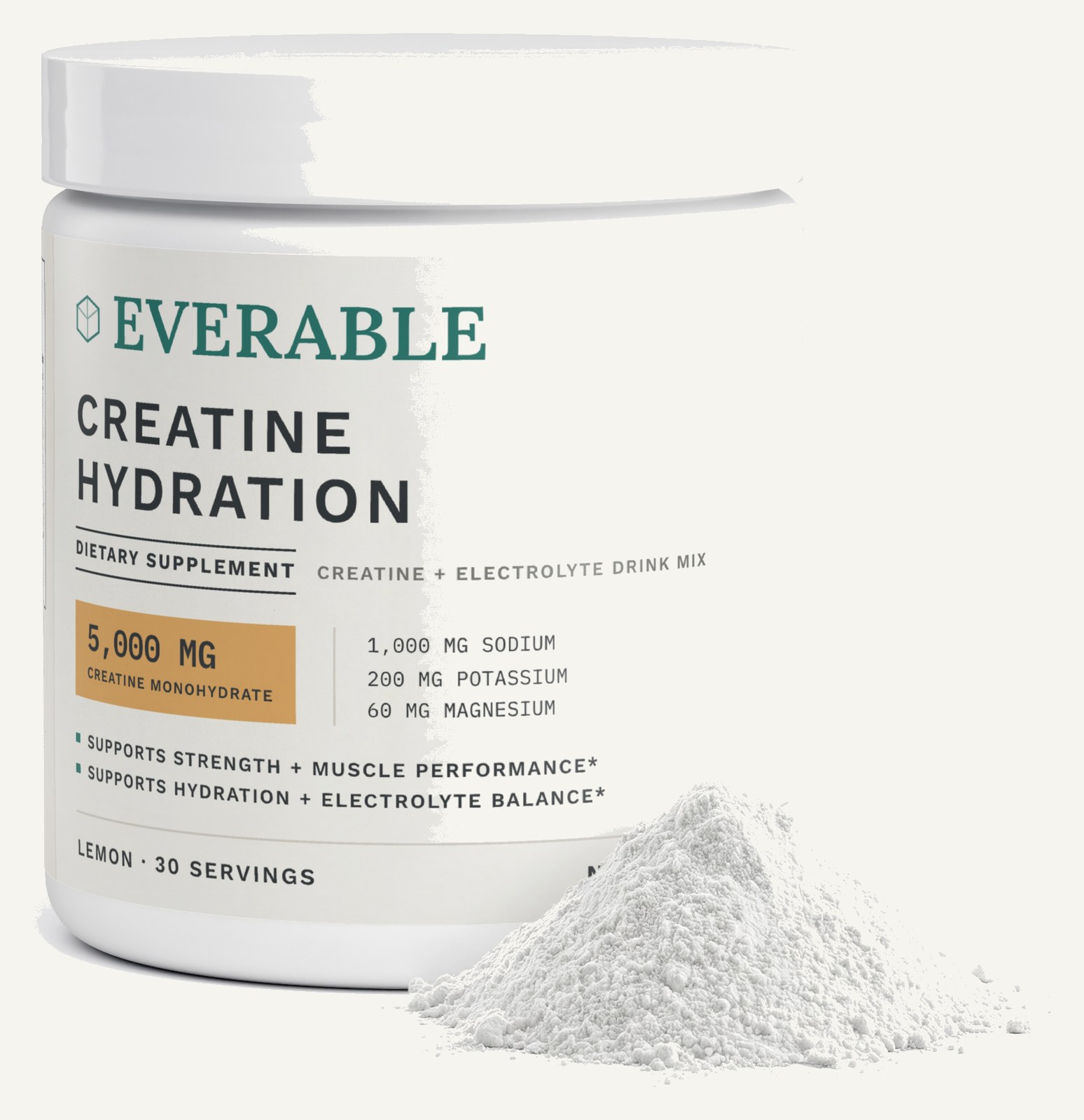
EverAble's Creatine + Electrolyte Powder puts the electrolyte side of that routine into the same scoop as your daily creatine. One serving carries 5g of creatine monohydrate, along with 1,000mg sodium, 200mg potassium, and 60mg magnesium malate — a full dose of both, not a diluted trace amount of one.
Built for the routine you already have
It's formulated to support hydration and electrolyte balance, mixed into water once a day, before you hit the trailhead or once you're back.
This statement has not been evaluated by the Food and Drug Administration. This product is not intended to diagnose, treat, cure, or prevent any disease.
Other sports



Questions with answers
How much water should I actually bring on a hot-weather hike?
The National Park Service recommends roughly a quart — about a liter — of water per hour of hiking in hot, dry conditions, and at least two quarts per day even in winter. It also specifically recommends carrying electrolyte replacements like sports drinks or salty snacks once you're sweating heavily, not just plain water.
Does elevation gain or a loaded pack change how much I need to hydrate?
It changes how hard you're working, which generally increases fluid and sodium needs: the Compendium of Physical Activities puts hiking with a loaded daypack meaningfully higher in exertion (around 7.8 METs) than flat, unloaded hiking (around 5.3–6.0 METs), and the CDC notes sweat rates can reach a liter per hour during heat exertion regardless of terrain.
Do hikers over 40 need to think about hydration differently?
Trail conditions don't change with age, but your body's thirst signal does: GSSI research on older exercisers found a consistently weaker thirst response to the same level of dehydration seen in younger people. On a long or hot hike, that makes it worth drinking on a schedule rather than waiting to feel thirsty.
Is water alone enough, or should I add electrolytes on the trail?
For a short, easy walk, water alone is usually fine. For longer or hotter hikes, official guidance from the National Park Service and the CDC both call out adding electrolytes once sweat losses are significant, since sodium lost through sweat isn't restored by plain water.
What's actually in EverAble's Creatine + Electrolyte formula?
One scoop delivers a full dose of both sides — not a diluted trace of one.
5g creatine monohydrate • 1,000mg sodium • 200mg potassium • 60mg magnesium malate
Is this for serious backpackers only, or does it work for casual day hikers too?
It's built for active adults 40+ who spend real time outdoors — whether that's a weekend day hike or a longer trail outing — not for multi-day backpacking or mountaineering protocols. If you're on the trail long enough in the heat to notice sweat loss or fatigue, the formula is aimed at you.
How much water should I actually bring on a hot-weather hike?
The National Park Service recommends roughly a quart — about a liter — of water per hour of hiking in hot, dry conditions, and at least two quarts per day even in winter. It also specifically recommends carrying electrolyte replacements like sports drinks or salty snacks once you're sweating heavily, not just plain water.
Does elevation gain or a loaded pack change how much I need to hydrate?
It changes how hard you're working, which generally increases fluid and sodium needs: the Compendium of Physical Activities puts hiking with a loaded daypack meaningfully higher in exertion (around 7.8 METs) than flat, unloaded hiking (around 5.3–6.0 METs), and the CDC notes sweat rates can reach a liter per hour during heat exertion regardless of terrain.
Do hikers over 40 need to think about hydration differently?
Trail conditions don't change with age, but your body's thirst signal does: GSSI research on older exercisers found a consistently weaker thirst response to the same level of dehydration seen in younger people. On a long or hot hike, that makes it worth drinking on a schedule rather than waiting to feel thirsty.
Is water alone enough, or should I add electrolytes on the trail?
For a short, easy walk, water alone is usually fine. For longer or hotter hikes, official guidance from the National Park Service and the CDC both call out adding electrolytes once sweat losses are significant, since sodium lost through sweat isn't restored by plain water.
Sources
Last reviewed September 19, 2026
- National Park Service (Saguaro NP) — Hiking Safety Information
- Gatorade Sports Science Institute — Dietary Water and Sodium Requirements for Active Adults
- Compendium of Physical Activities — MET Values for Hiking and Walking
- Cleveland Clinic — 9 Benefits of Hiking
- CDC Yellow Book — Heat and Cold Illness in Travelers